Your cart is currently empty!
Author: andrea.rihova@gpjp.cz
Monster cookies
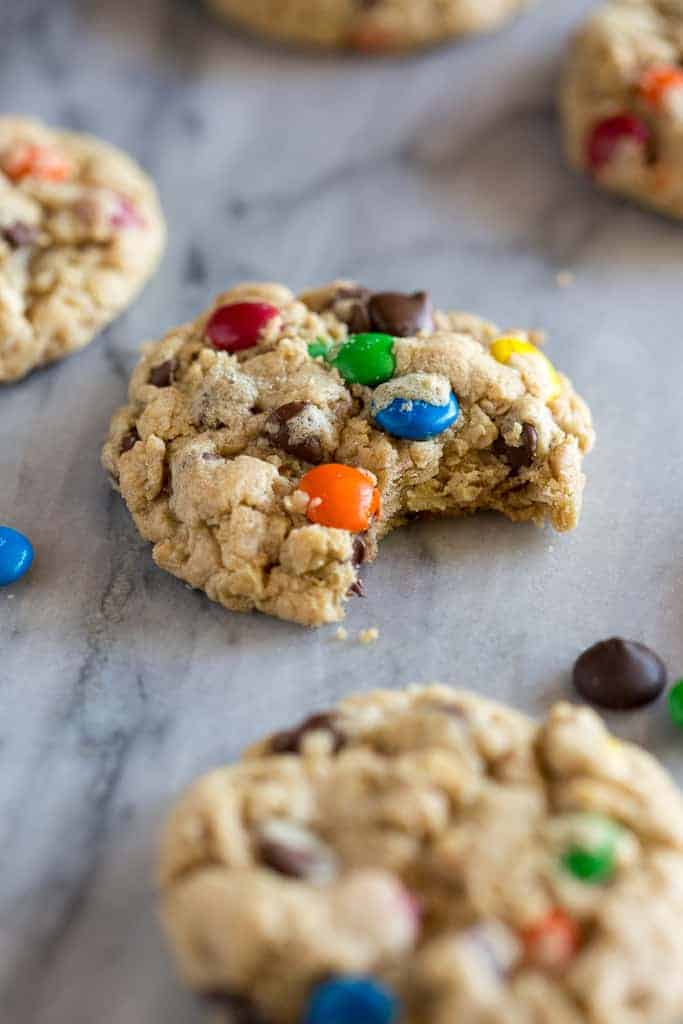
These Thick and Chewy Monster Cookies are loaded with peanut butter, oats, M&M’s and chocolate chips. They’re a cross between a chewy oatmeal chocolate chip cookie, and a peanut butter cookie, and they’re sure to be a huge hit with family and friends. There are too many fun variations. These Monster Cookies are always popular and I love the great texture from the oats and the subtle peanut butter flavor.
Why are they called Monster cookies?
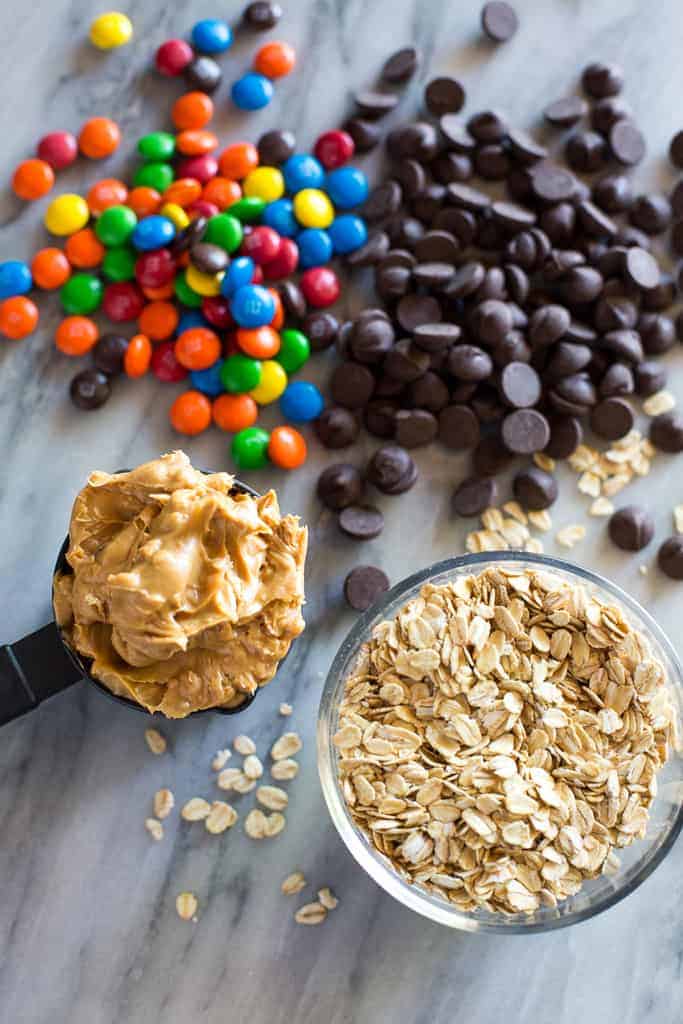
There’s not an exact answer for why these cookies are called “Monster” Cookies. Some people think it’s because they look like monsters, with their bumpy texture and fun colors. I like to think it’s because they’re stuffed with so much “stuff”, making them the “monster” of all cookies. Whatever the reason, all Monster Cookies have these ingredients in common: peanut butter, oats, chocolate chips and m&m chocolate candy.
How to keep the cookies from spreading?
During baking, cookies naturally spread, but the key is to make sure they don’t spread too much. To keep your monster cookies from spreading, be sure to use exact measurements (no guesstimating) and use room temperature ingredients, particularly the butter and eggs. You can also stop cookies from getting flat by chilling the dough for at least 15minutes before baking. Longer the cookies rest, they spread less.
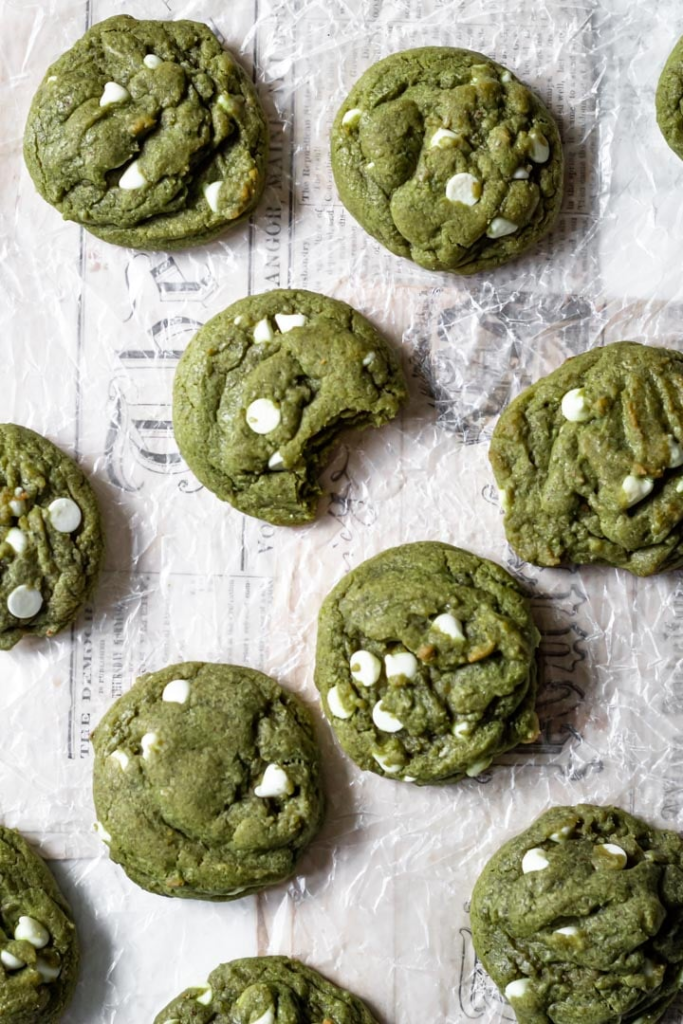
Brown butter white chocolate matcha cookies
These matcha cookies take a little bit of patience and time, but they are well worth it. Then brown your butter. Use a light colored pan to heat your butter over medium heat until it turns a golden yellow color.
Tips for making the best matcha cookies
Make sure the brown butter is not too hot
Cool down the butter before combining with the rest of your wet ingredients, so the heat from the butter doesn’t cook the eggs. Additionally, butter that’s too hot will create a greasier cookie.
Why do I use brown butter?
Brown butter creates a cookie with a crispy outside and a chewy center. It also adds an extra nutty flavor to the cookies.
How to get the perfect thin, chewy texture
Whisk your wet ingredients until you get a light and creamy mixture. This is the key to getting crispy and chewy cookie.
For how should the dough rest?
Rest the dough in the fridge for at least 30 minutes. Resting the dough allows the liquid to distribute throughout and ensures the cookie bakes more evenly. It also helps to cool down the dough, so your butter melts at a slower rate. The faster your butter melts, the more your cookies spread in the oven. If you want a really chunky cookie, add more flour. If you like a thinner cookie, rest it for a shorter amount of time.
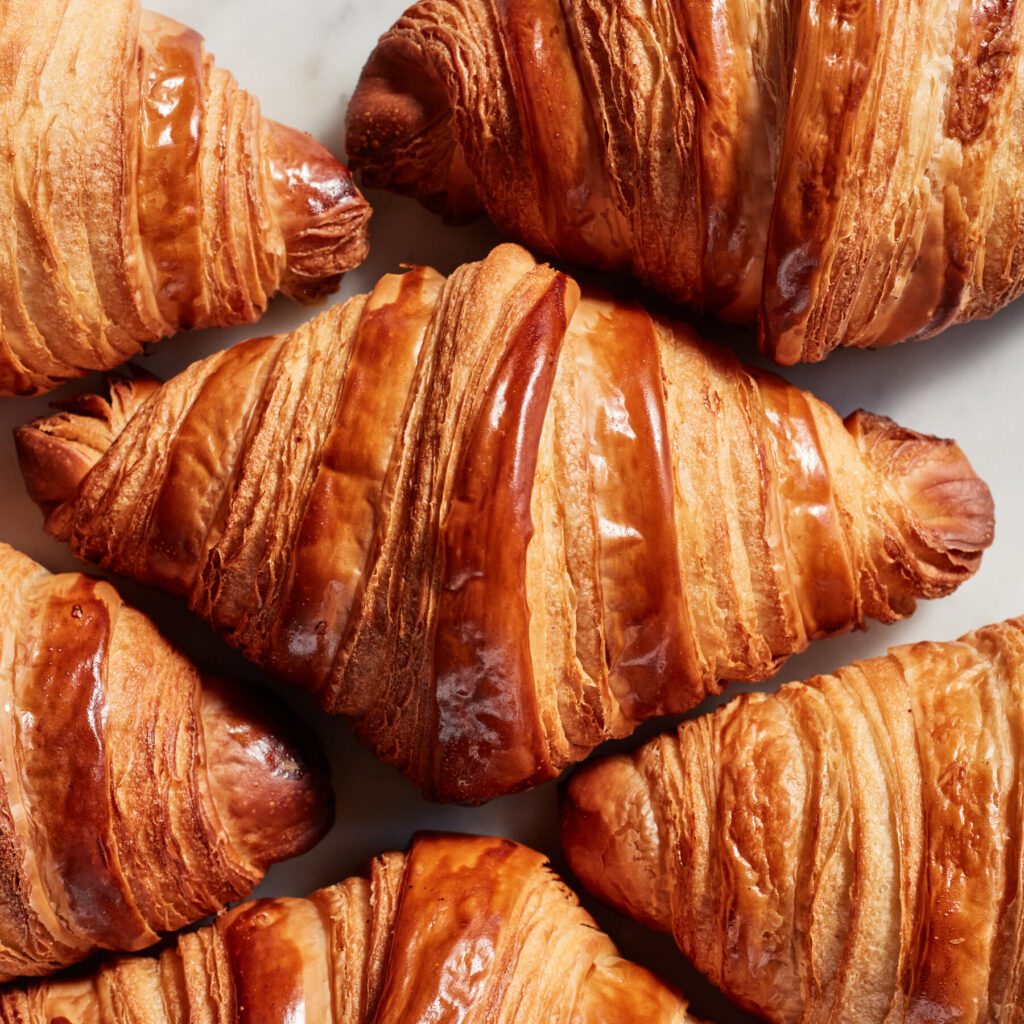
Croissants
Croissant is a French pastry made from puff pastry in a crescent shape.
It is a buttery, flaky, viennoiserie pastry inspired by the shape of the Austrian kipferl, but using the French yeast-leavened laminated dough. Croissants are named for their historical crescent shape. The dough is layered with butter, rolled and folded several times in succession, then rolled into a thin sheet, in a technique called laminating. The process results in a layered, flaky texture, similar to a puff pastry.
Crescent-shaped breads have been made since the Renaissance, and crescent-shaped cakes possibly since antiquity. The modern croissant was developed in the early 20th century, when French bakers replaced the brioche dough of the kipferl with a yeast-leavened laminated dough.
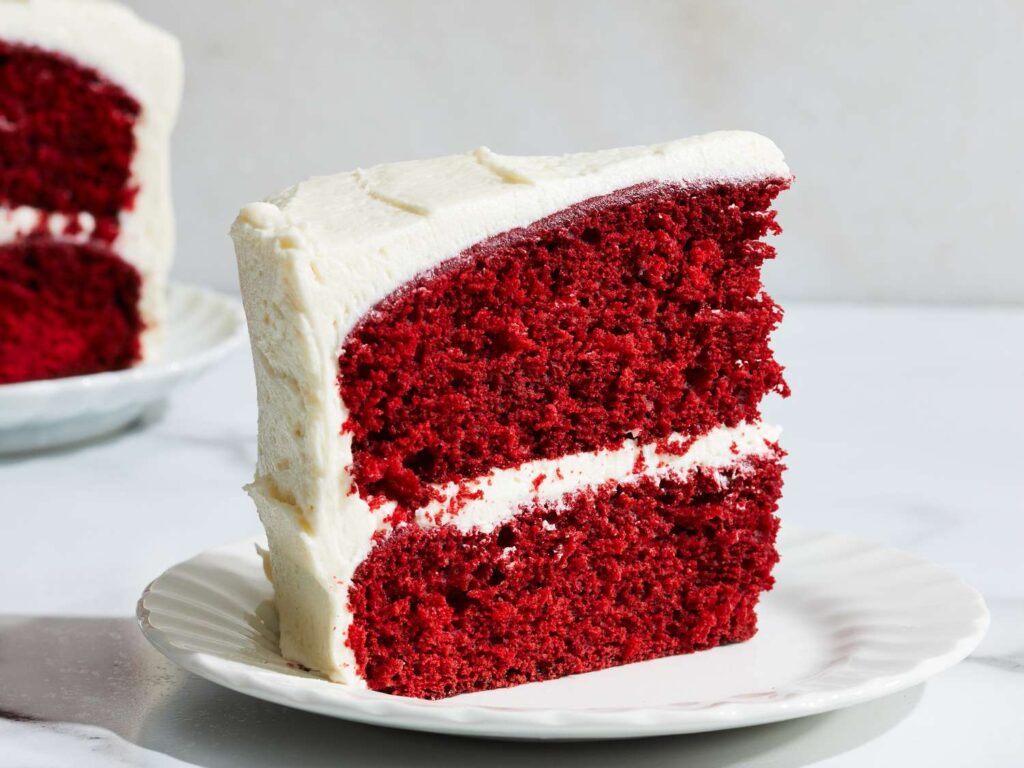
Red velvet cake
Red velvet cake is traditionally a red, crimson, or scarlet-colored layer cake, layered with ermine icing or cream cheese icing. Traditional recipes do not use food coloring, with the red color possibly due to non-Dutched, anthocyanin-rich cocoa, and possibly due to the usage of brown sugar, formerly called red sugar.
Common ingredients include buttermilk, butter, cocoa, vinegar, and flour. Beet juice or red food coloring may be used for the color
Variations
In addition to the many variations of red velvet cake, there are various red velvet-flavored products, including protein powder, tea, lattes, Pop-Tarts, waffles, pancakes, and alcoholic beverages. The scent is used for candles and air fresheners as well. For dietary restrictions, such as those due to allergies and ingredient sensitivity, vegan, gluten-free, and dairy-free variations are available
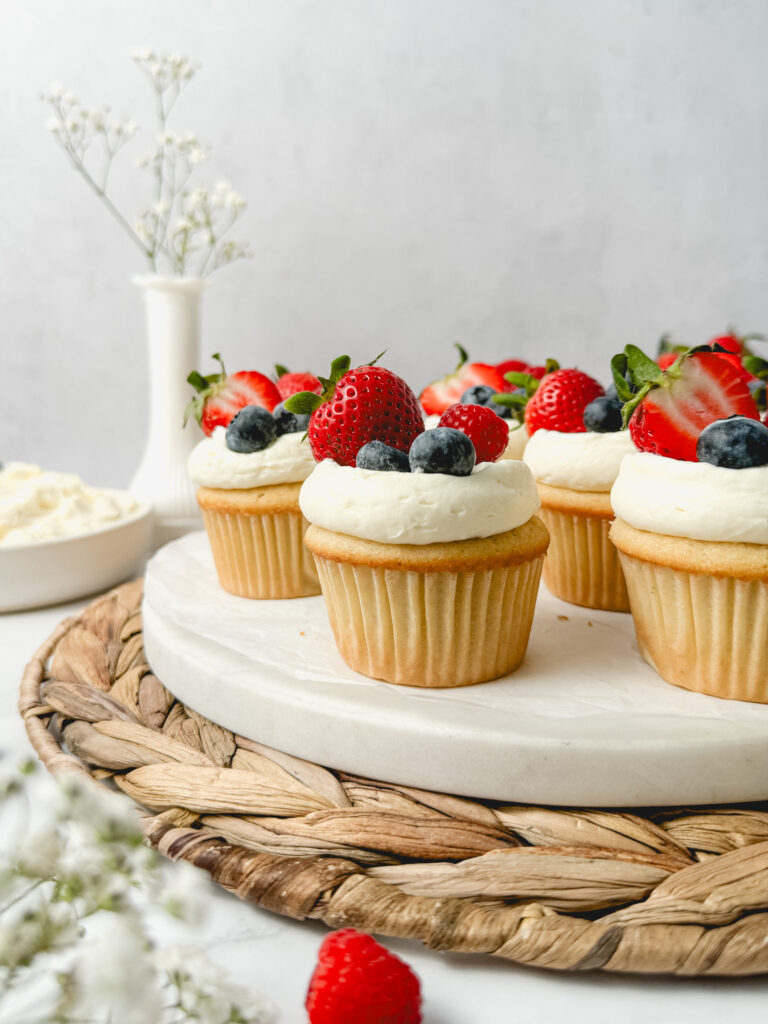
Cupcakes
Cupcakes are small, tasty snack cakes that are favored for their portability and portion-control. They are batter cakes baked in a cup-shaped foil or temperature resistant paper.1
A cupcake can be prepared from a variety of formulations and can be decorated with cream and icings. Its composition is not that different from traditional high-ratio layer cakes. The only difference is the cupcakes higher batter viscosity, an important aspect for better processing and baking tolerances.
Origin
While the first official mention of the word cupcake was in the early 19th century, this dessert seems also to be referenced in 1796 as “a light cake to bake in small cups.” Today, one can find a wide variety of cupcakes, ranging from the simple to the sublime, and entire businesses have emerged in the last decade focused solely on cupcakes
Variants
- A cake in a mug (more commonly known as a mug cake) is a variant that gained popularity on many Internet cooking forums and mailing lists. The technique uses a mug as its cooking vessel and can be done in a microwave oven. The recipe often takes fewer than five minutes to prepare.
- A cake in a jar a glass jar is used instead of mugs, trays or liners.
- A butterfly cake is a variant of cupcake, also called fairy cake for its fairy-like “wings”. The top of the cake is separated and split in half. A filling (e.g. icing or jam) is placed into the hole. The two halves are placed onto the filling to resemble wings. Other decorations, such as sprinkles and icing sugar, are often added over the cake.
- Elaborately frosted cupcakes may be made for special occasions such as baby showers, graduations, or holidays.
- A cake ball or cake pop is an individual portion of cake, round like a chocolate truffle, that is coated in chocolate. These are typically formed from crumbled cake mixed with frosting, rather than being baked as a sphere.
- A gourmet cupcake is a recent variant of cupcake. Gourmet cupcakes are large and filled cupcakes, based around a variety of flavor themes, such as Tiramisu or Cappuccino. In recent years there has been an increase in stores that sell only gourmet cupcakes.
- As an alternative to a plate of individual cakes, some bakers place standard cupcakes into a pattern and frost them to create a large design, such as a basket of flowers or a turtle.
- A cupcake cone or cupcone is a cupcake baked in an ice cream cone. After baking, icing or other decorations may be added.
Cookies
Cookies are baked treats. A cookie is a small sweet, crispy or cake-like pastry most often made with flour, sugar, liquid and fat. They are characterized by:
- High sugar content
- High fat content
- Low moisture
- Crispy or chewy
Origin and varieties
The cookie’s name is derived from the Dutch word koekje, meaning “little cake.” The earliest cookie dates as far back as 7th century A.D. in Persia, where sugar was first cultivated. In England and the British colonies, cookies are also called biscuits. Germans call them Keks, or Plätzchen, and Spaniards call them galletas. In Italy, there are several forms of cookies, including amaretti and biscotti. The most popular cookie flavor in America is chocolate chip.